AI and Automation
Modular AI Architecture: Scaling Executive Reach
Monolithic AI assistants are built for questions. Modular agent fleets are built for work.
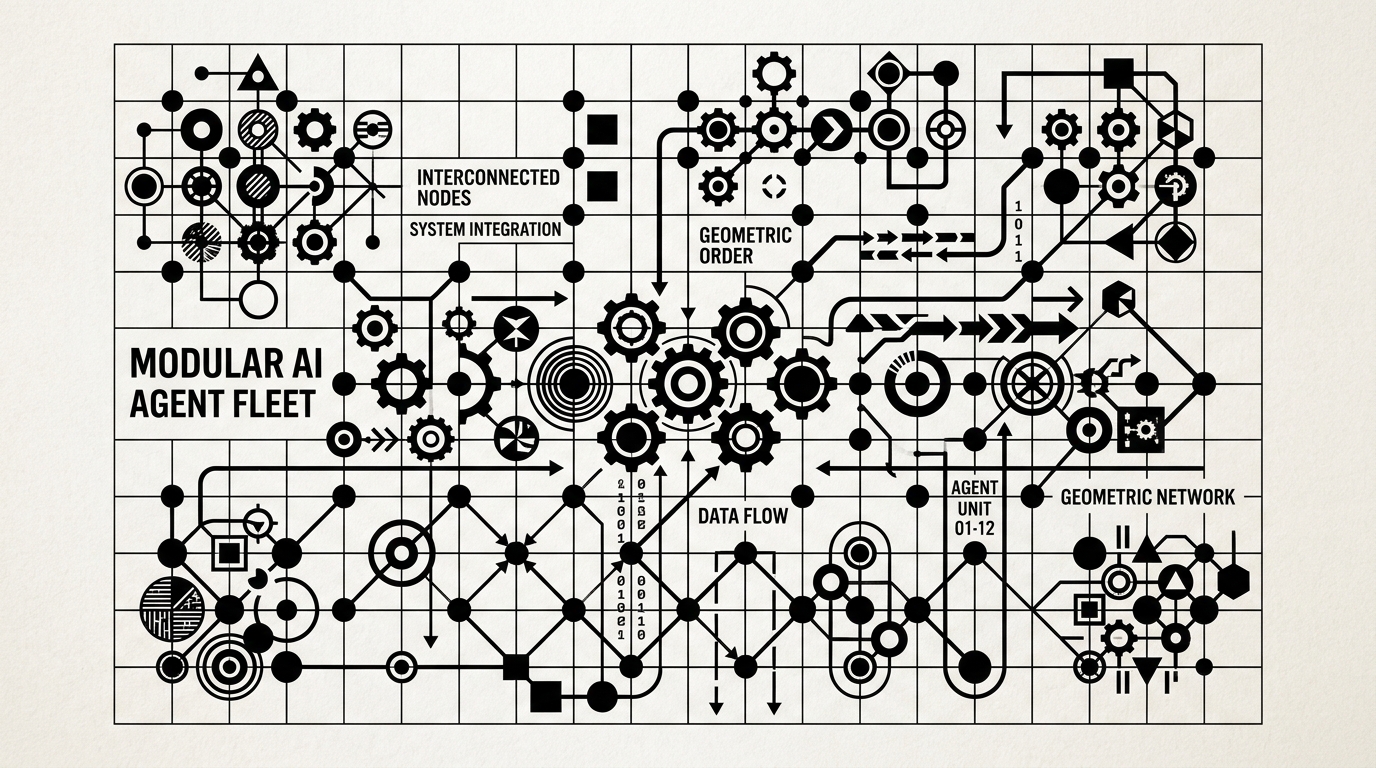
Most people are using AI backward. They treat LLMs like a better version of Google Search—a place to go when they have a question. This is a reactive posture. It saves seconds, maybe minutes. But it doesn't fundamentally change the capacity of an executive.
To change capacity, you have to move from "using AI" to "operating an AI architecture." This requires a shift from monolithic thinking to modular thinking.
When I built Mira, my goal was to extend my reach. I didn't want a chatbot I could talk to; I wanted a fleet I could deploy. The difference is architectural. A monolithic assistant tries to do everything and eventually becomes fragile. A modular fleet is composed of specialized agents that each do one thing exceptionally well.
The Fragility of the Generalist
We are conditioned to want the "smartest" general-purpose AI. But in an operational context, general intelligence is often a liability. A generalist agent has too much surface area for error. It hallucinates because it is trying to be everything to everyone.
In my fleet, I don't have one agent that "helps with marketing." I have an agent that only reads Google Search Console data. I have an agent that only writes initial drafts of technical blog posts. I have an agent that only audits those drafts for voice alignment.
By breaking the work down into modular units, I create a system that is resilient. If the research agent fails, it doesn't break the distribution agent. More importantly, I can verify the output of each module with a high degree of precision. Trust but verify is only possible when you have a narrow enough scope to define what "correct" looks like.
The API-First Executive
The real breakthrough happens when you stop thinking about these agents as "tools" and start thinking about them as "endpoints."
My agents communicate through structured data. They don't send me paragraphs of chat; they send me JSON objects that represent the current state of a task. This allows for a level of coordination that a human assistant simply cannot match.
For example, my monitoring agents constantly scan the hospitality tech landscape for specific signals. When they find one, they don't just alert me. They trigger the research module. The research module triggers the synthesis module. By the time I see the notification, the "work" of gathering context is already done. I am presented with a decision, not a research project.
Reducing Management Debt
The biggest hidden cost of AI adoption is management debt. If you have to spend 20 minutes prompt-engineering an AI to get a 10-minute task done, you are losing. You are managing the AI, and that management is a tax on your bandwidth.
A modular architecture reduces this debt through persistence and memory. My agents know my preferences, my data sources, and my quality standards. They don't need a fresh prompt every morning. They operate on a set of standing orders.
The practical result: routine work happens without being asked. This is how you scale reach. You remove yourself from the critical path of routine operations so you can be more present in the decisions that actually require your judgment.
Building Your First Module
Getting started doesn't require a massive engineering project. It starts with identifying a single, high-frequency task that creates drag.
- Identify the task (e.g., summarizing weekly performance reports).
- Define the input (where does the data live?).
- Define the output (what format do you actually need?).
- Set a verification gate (how do you know it's accurate?).
Once you have one module working, don't expand it. Build a second module that takes the output of the first as its input. This is how you build a fleet. You connect specialized units into a pipeline.
The future of leadership isn't about being the smartest person in the room. It's about operating the most effective system. Modular AI is the infrastructure that makes that possible.
Target keyword
Target keyword: modular AI architecture
Building scalable executive automation requires moving away from single-prompt interactions toward structured, modular systems that reduce management debt and increase operational reliability.