From Writer's Block to Voice-First Workflows: A 20-Year Evolution
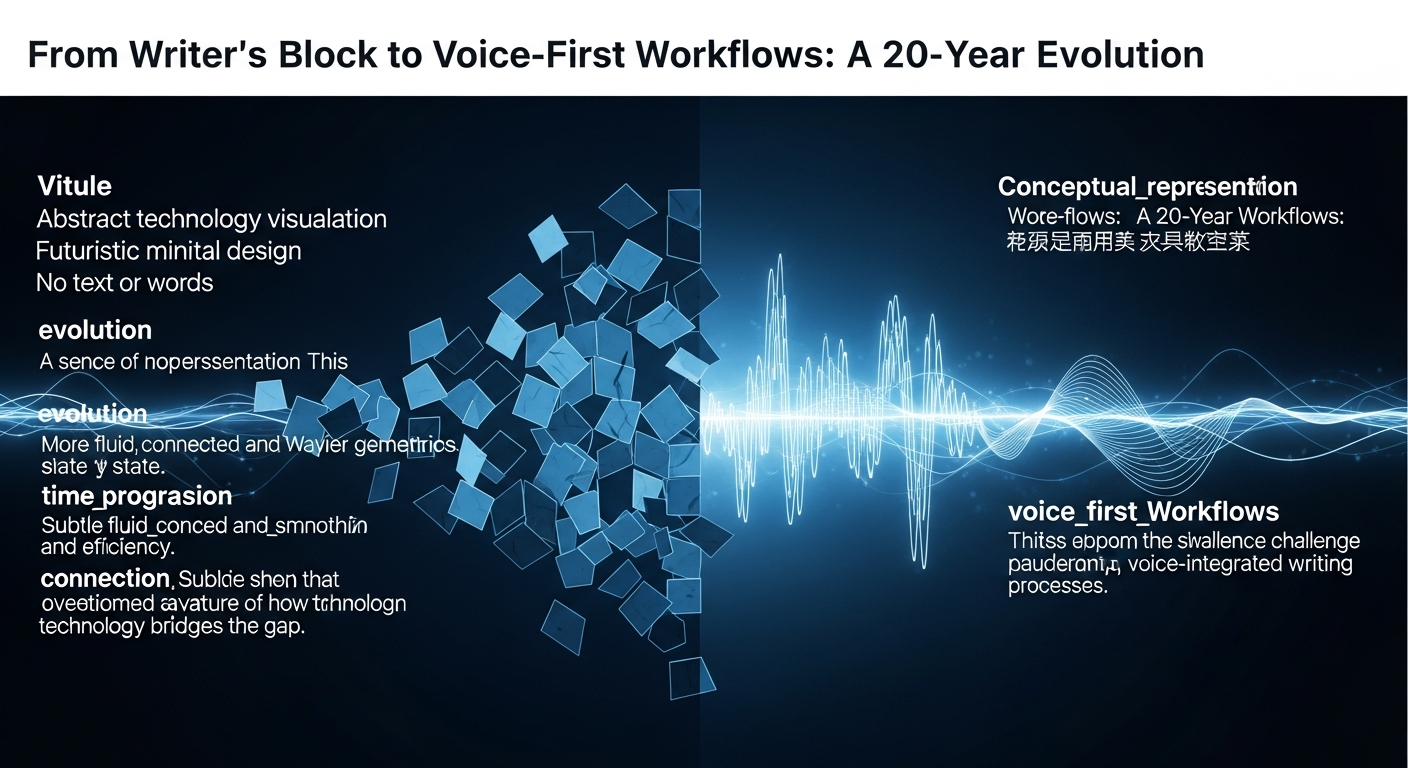
For twenty years, I've watched writing tools evolve from basic word processors to AI-powered collaborators. The journey from writer's block to voice-first workflows represents more than technological progress—it's a fundamental shift in how we think, create, and communicate.
Writer's block wasn't just about lacking words. It was about the cognitive load of translating thought to text, the friction of interface, the paralysis of the blank page. Voice-first workflows remove that friction entirely.
The Evolution of Writing Tools
The progression follows a clear pattern: from tools that capture text to tools that capture thought. Word processors helped us edit. Grammar checkers helped us polish. AI writing assistants help us think.
Key Transitions in Writing Technology
- 2000s: Word processing focused on formatting and editing
- 2010s: Grammar and style tools improved polish
- 2020s: AI assistants helped generate and structure content
- 2025+: Voice-first systems capture thought directly
Voice-First as Thought Capture
The breakthrough isn't speech-to-text accuracy. It's the removal of translation layers between thought and expression. When you speak your thoughts directly into a system that understands context, intent, and nuance, you're not writing—you're thinking aloud with a perfect memory.
This changes everything about how professionals work. Strategy documents emerge from conversation. Meeting notes transform into action plans. Complex ideas develop through dialogue rather than solitary composition.
Originally published on LinkedIn
This article was originally published on LinkedIn and has been cross-posted to kaykas.com with permission.

Jascha Kaykas-Wolff
CEO of Visiting Media, former CMO of Mozilla and BitTorrent, author of "Growing Up Fast", and pioneer of Agile Marketing methodology. Building AI agent infrastructure for executive automation.